listicle
The Best Free Email Marketing Tools in 2026 (We Tested 7)
We tested seven free email marketing tiers for 30 days. Which are genuinely usable, which push you to upgrade fast, and what changed in June 2026.
 By Manu A. · · 11 min read ·
Updated
By Manu A. · · 11 min read ·
Updated 
There’s a difference between “free” and “useful.” Most “free email marketing” listicles include tools whose free tiers are designed to push you to paid within a week. We tested all the major free tiers across 30 days, on real workflows, to find the ones that genuinely work.
Quick verdict. Beehiiv now has the most generous usable free tier: 2,500 subscribers, unlimited sends, and monetization (ad network, referrals) built in. Brevo wins if you hold a huge list but send rarely, with unlimited contacts capped at 300 sends per day. MailerLite, our long-time default, cut its free tier to 250 subscribers and 2,500 sends in June 2026; it is now the pick for the cheapest upgrade path ($12/month Comfort) rather than for staying free. The rest are situational or restrictive.
This piece walks through what each free tier actually includes, what’s gated, and which ones you can run a real business on without upgrading for the first 6-12 months.
At a glance: what the free tiers actually offer
| Tool | Subscriber cap | Send volume | Automations | Notable gating |
|---|---|---|---|---|
| Beehiiv | 2,500 | Unlimited sends | Available (Scale tier) | Some monetization gated to paid |
| MailerLite | 250 | 2,500/mo | 3 active (5 steps) | Free tier cut hard in June 2026 |
| Brevo | Unlimited | 300/day (~9,000/mo) | Limited | Daily send cap restrictive |
| Sender | 2,500 | 15,000/mo | Limited | Smaller tool, less mature |
| Mailchimp | 500 | 1,000/mo | One basic | Most features paywalled |
| Kit | 10,000 | Unlimited broadcasts | One basic | Tagging/integrations paywalled |
| MailJet | 200 contacts | 6,000/mo (200/day) | None | Most restrictive in this list |
How we tested
Each free tier ran for 30 days against a real workflow — building a 200-subscriber list, sending one weekly broadcast, and running a 5-email welcome series.
What we measured: Setup time, deliverability (opens and inbox placement), feature accessibility on free, friction level of upsell prompts, and whether the free tier could actually run our test workflow end to end.
Real billing math: Modelled the upgrade cost when a typical small business grows past the free tier — 500 → 1,000 → 2,500 → 5,000 subscribers.
We re-test every 90 days. Last updated noted at the bottom.
1. Beehiiv: the most generous free tier in the category
Beehiiv is the only free tier in this list designed specifically around newsletter monetization. 2,500 subscribers free, unlimited sends, AND access to the Beehiiv Ad Network and Recommendation Network.
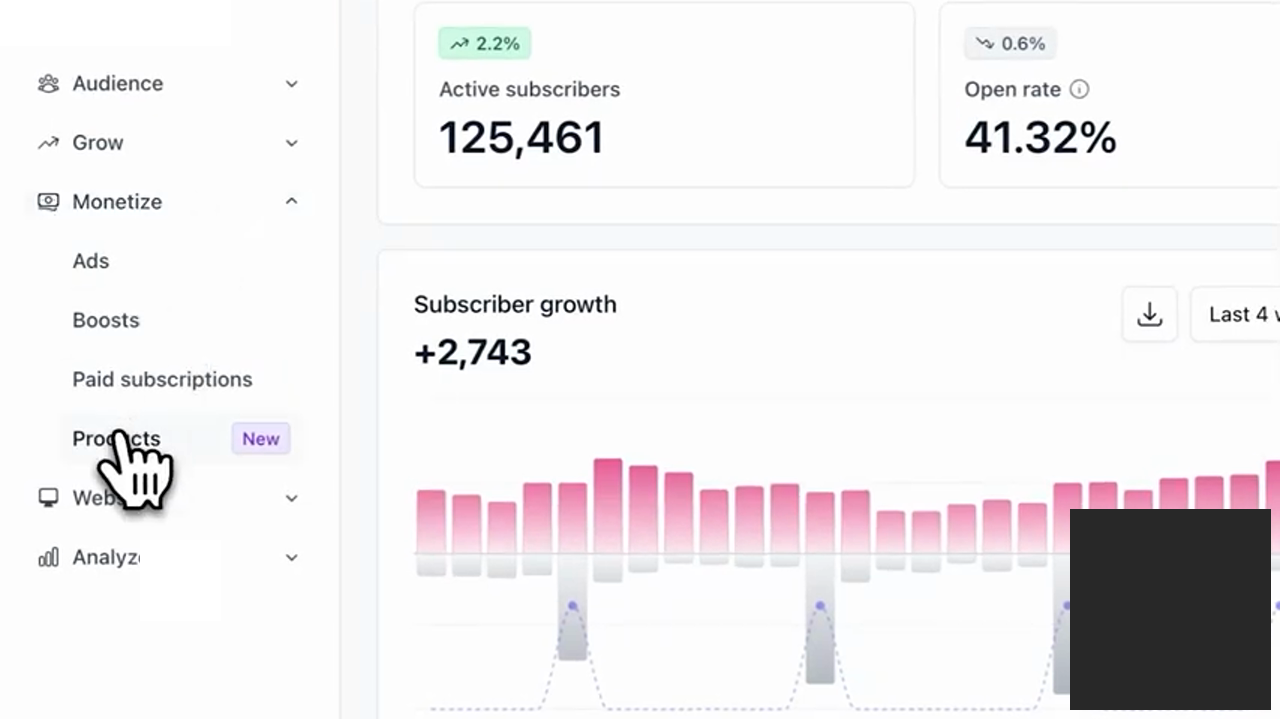
Frame from “How to Create Digital Products in beehiiv” (workspace name redacted). The Monetize sidebar — Ads / Boosts / Paid subscriptions / Products — is what no other free tier on this list bundles. Most platforms make you wire up Gumroad or Lemon Squeezy externally; Beehiiv puts the whole monetization stack inside the platform.
Best for. Newsletter operators, paid-newsletter aspirants, content creators whose primary distribution is the inbox.
Skip the free tier if. You’re not running a newsletter — Beehiiv’s automation builder is intentionally simpler than Kit/Mailchimp/MailerLite, optimized for “publish weekly” not “complex segmented funnels.”
What’s included on free.
- 2,500 subscribers
- Unlimited sends
- Custom website + newsletter pages
- Ad Network access
- Recommendation Network
- Basic campaign analytics
- Custom domain support
- API access (limited)
What’s gated to paid.
- Boosts marketplace (Beehiiv’s monetization-focused growth tool)
- 0% paid subscription take rate (paid plans waive Beehiiv’s fee)
- Email automations (welcome series, drip campaigns)
- Advanced analytics
- Multiple publications per account
- Removing Beehiiv branding
Where it wins. 2,500 subscribers free is dramatic. Native ad network access from day one. Built for the work newsletter operators actually do.
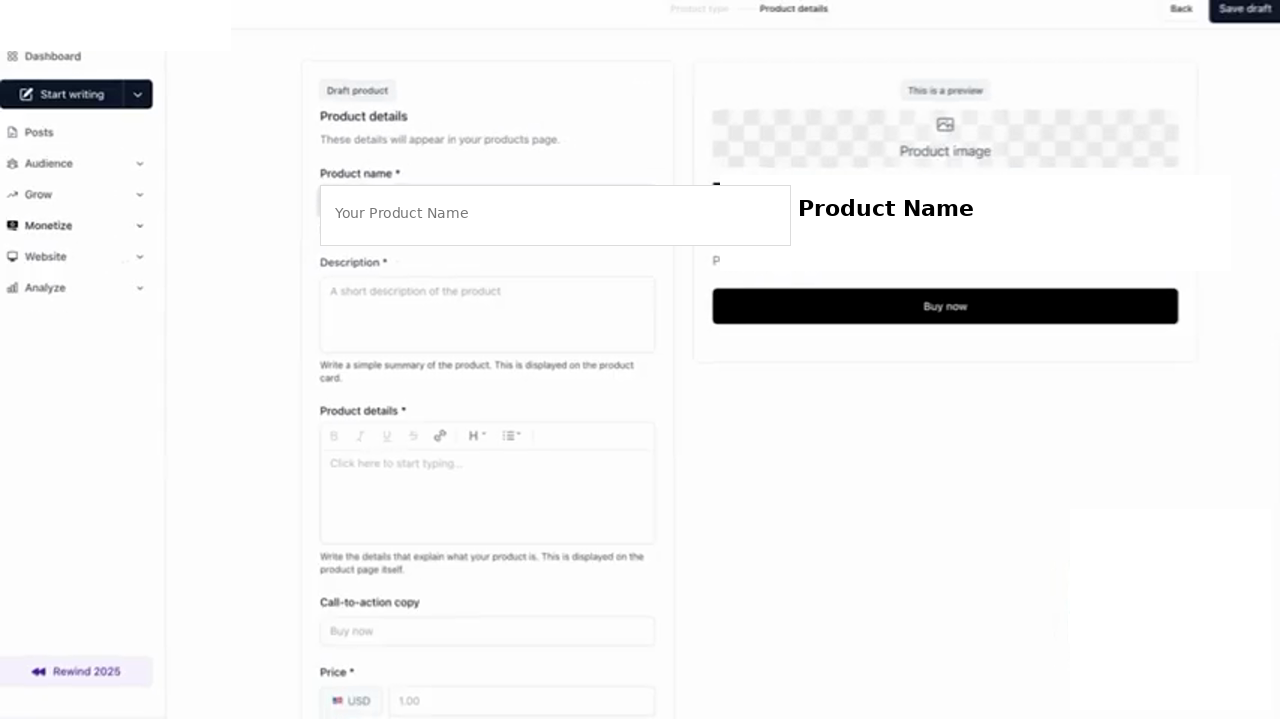
Same tutorial. The Products feature in action — name your product, write a description, set a price, watch the preview card update on the right. Kit’s free (or paid) tier has no native equivalent; creators on Kit wire up Gumroad or Lemon Squeezy externally and embed the link.
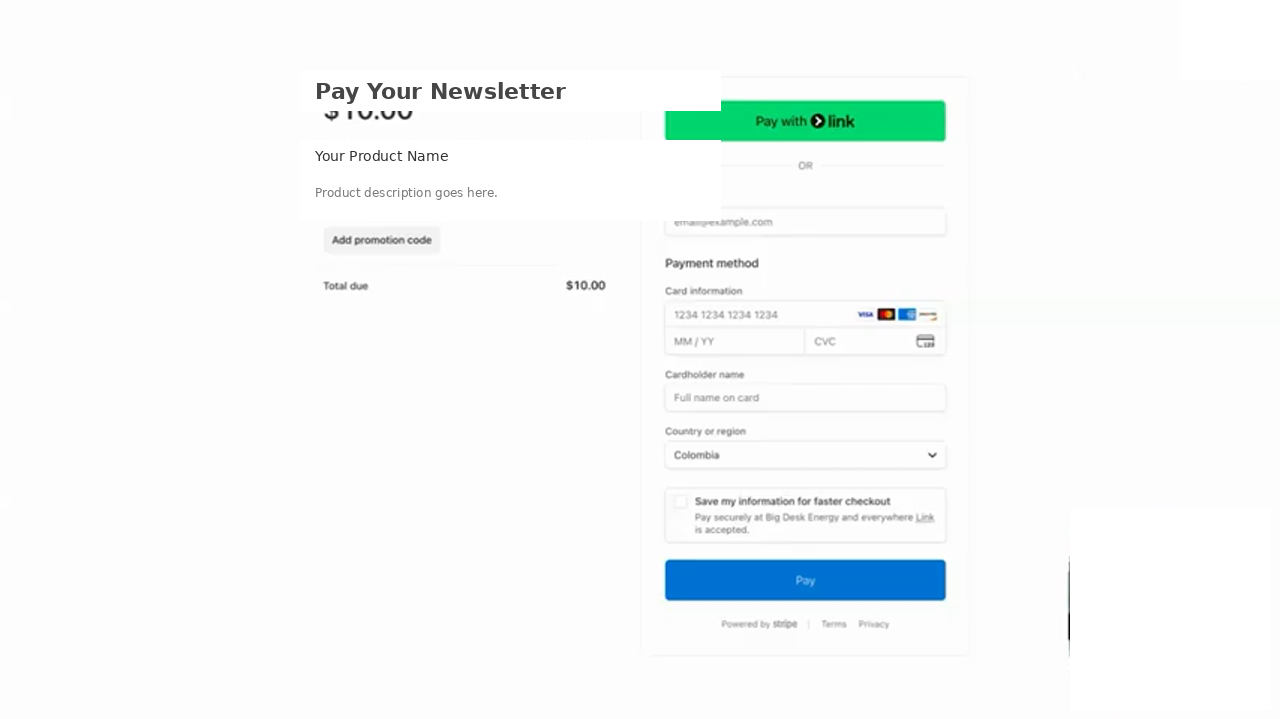
Same tutorial. What the buyer sees on checkout — Stripe-powered, but Beehiiv is the merchant of record, meaning revenue flows through Beehiiv first (with their take rate on free) before settling to your Stripe. The 0% take rate is the headline reason Beehiiv users upgrade to paid plans.
Where it loses. Email automations are paid-only (a real gap if you want a welcome series). Less mature for non-newsletter use cases.
We covered the deeper Beehiiv vs Kit comparison in our Kit vs Beehiiv review.
2. MailerLite: cut down on free, still the best cheap upgrade path
MailerLite was our default free recommendation for years, on numbers that no longer exist: 1,000 subscribers, 12,000 sends, unlimited automations. In June 2026 MailerLite restructured its plans and cut the free tier to 250 subscribers, 2,500 sends per month, and 3 active automations (5 steps each). Existing free accounts moved to the new limits on July 1, and free-plan feature limits start being enforced in mid-August 2026.

Frame from “Complete MailerLite Guide for New Users.” The free tier still looks like this, the same Subscribers UI as paid, but it is now capped at 250 contacts and 2,500 sends/month.
Best for. Starting on the platform you already know you will pay for. MailerLite’s real pitch is no longer the free tier, it is the $12/month Comfort plan sitting right above it, the cheapest serious paid plan in the category.
Skip the free tier if. You want to stay free for 6-12 months. At 250 subscribers, any list that is actually growing outgrows this in weeks. That job now belongs to Beehiiv or Brevo.
What’s included on free (post-June 2026).
- 250 subscribers, 2,500 sends/month
- 2 user seats (up from 1, the one limit that got better)
- 3 active automations, up to 5 steps each
- All three editors: drag-and-drop, custom HTML, and simple
- 1 website (with blog) + 1 landing page
- 3 active forms plus promotional pop-ups
- Sell 1 digital product
- Shopify and 100+ other integrations
What’s gated to paid.
- Removing MailerLite branding from emails and forms
- 50 automations, multivariate testing, AI writing assistant, smart sending, preference center (Comfort, from $12/month)
- Unlimited sends, automations, seats, and landing pages (Power, from $25/month)
Where it wins. Feature breadth. Even trimmed, the free plan includes a website builder, blog, pop-ups, and a custom HTML editor that most competitors gate. And the upgrade math is the best in the category: $12/month for Comfort versus $20+ almost everywhere else.
Where it loses. The cap. 250 subscribers is the second-smallest allowance in this list (only MailJet is stingier), and the 2,500-send ceiling rules out any real cadence on a mid-size list.
For more context, see our Mailchimp alternatives review where MailerLite is still the overall winner, on paid value rather than free limits.
3. Brevo — the unique “unlimited contacts” play
Brevo (formerly Sendinblue) is structured differently from every other free tier. Pricing scales by sends, not contacts. This means: unlimited contacts on free, but capped at 300 sends per day (~9,000/month).
Best for. B2B businesses with huge contact lists but rare sends. Real estate agents with 5,000 client contacts who send a monthly newsletter. Medical practices, law firms, legacy B2B with bigger lists than send volume.
Skip Brevo if. You send weekly or more frequently to your full list — the 300/day cap will choke you fast. Or if you want the cleanest builder UI — Brevo’s UI is dated.
What’s included on free.
- Unlimited contacts
- 300 emails/day
- Drag-and-drop builder
- Email customization
- Templates
- Mobile app
- Real-time reporting
What’s gated to paid.
- More than 300 sends/day
- A/B testing
- No Brevo branding
- Multi-user
- Advanced statistics
- Marketing automations
- Send-time optimization
Where it wins. Only platform with unlimited contacts on free. SMS bundled (paid). Strong CRM integration if you also use Brevo’s CRM.
Where it loses. 300/day cap is restrictive for active senders. UI feels older than competitors. Less polished than MailerLite or Beehiiv.
4. Sender — the underdog
Sender is the smaller, less-marketed alternative that punches above its weight. 2,500 subscribers free with 15,000 sends/month — meaningfully more than Mailchimp Free.
Best for. New bloggers, small businesses, anyone who specifically wants a paid-feature-rich free tier and doesn’t need name-brand recognition.
Skip Sender if. You need the deepest automations — Sender’s automation builder is more limited than MailerLite’s. You need multi-tool ecosystem (Sender’s standalone).
What’s included on free.
- 2,500 subscribers
- 15,000 sends/month
- Drag-and-drop builder
- Basic automations (welcome, etc.)
- Forms and popups
- Basic landing pages
- Email A/B testing (yes, on free)
What’s gated to paid.
- More automation triggers
- Push notifications
- Removing Sender branding
- API access
- Advanced segmentation
- SMS (paid add-on regardless of tier)
Where it wins. 2,500 contacts + 15,000 sends + A/B testing on free is uniquely generous. Cleaner UI than Brevo.
Where it loses. Smaller ecosystem, fewer integrations. Less name recognition (matters if your team is hiring marketing freelancers familiar with major platforms).
5. Mailchimp — once the default, now restrictive
Mailchimp is the platform with the most brand recognition. Its free tier is the smallest in this list — and the gating is aggressive.
Best for. Brand-new senders specifically wanting Mailchimp’s UI familiarity (often from previous use). Hobbyists with sub-500 subscriber lists.
Skip Mailchimp Free if. You want an actually useful free tier — every other platform in this list gives you more. Or if you’re comparison-shopping by feature parity.
What’s included on free.
- 500 subscribers
- 1,000 emails/month
- Basic email builder
- One basic automation
- Basic forms
- Mailchimp branding required on emails
What’s gated to paid.
- More than 500 contacts (forces upgrade fast)
- More than 1,000 emails/month
- A/B testing
- Multi-step automations
- Send time optimization
- Custom branding (no Mailchimp watermark)
- Integrations beyond basics
Where it wins. Brand recognition. Some specific integrations Mailchimp pioneered.
Where it loses. Most restrictive free tier in this list. Aggressive upsell prompts. Hasn’t kept pace on free-tier generosity since Intuit acquisition.
We covered why most users are leaving Mailchimp in our alternatives review.
6. Kit — the largest subscriber cap, but with strings
Kit (formerly ConvertKit) offers the largest subscriber cap on free — up to 10,000 subscribers. That sounds generous until you read what’s missing.
Best for. Creators specifically using Kit for broadcast newsletters and not yet ready to invest in the platform’s depth. Solo writers building an audience before monetizing.
Skip Kit Free if. You actually need Kit’s signature features (tagging, segmentation, automations, integrations) — those are paywalled. The free tier is essentially a stripped-down broadcast tool with the Kit name.
What’s included on free.
- Up to 10,000 subscribers (yes, really)
- Unlimited email broadcasts
- Unlimited landing pages
- Unlimited forms
- Free migration help
What’s gated to paid.
- Visual automations (only one basic on free)
- Audience tagging logic
- Integrations beyond basics
- A/B testing
- Custom HTML
- Removing Kit branding
- Recommendations to other creators
Where it wins. Up to 10,000 subscriber cap is enormous. Free migration team. Good for “I just want to broadcast to a big audience without paying.”
Where it loses. Tagging — the feature that makes Kit worth using — is paywalled. So while 10k subscribers is great, you’re using a stripped-down product. We covered this in our Kit vs Beehiiv comparison.
7. MailJet — the most restrictive in this list
MailJet is included for completeness but doesn’t earn a strong recommendation. Free tier is meaningfully more restrictive than any other in this list.
Best for. Transactional email use cases (signup confirmations, order receipts) where 200 emails/day is sufficient. Not ideal for marketing email.
Skip MailJet Free if. You’re sending marketing email — every other tool in this list is more generous. MailJet is more competitive on its paid plans for transactional email use cases.
What’s included on free.
- 200 contacts
- 6,000 emails/month (200/day cap)
- Email API access
- Basic templates
What’s gated to paid.
- More contacts
- Higher daily volume
- Marketing automation
- Most segmentation
- A/B testing
- Removing MailJet branding
Where it wins. Strong transactional email API on paid plans (a category most other tools in this list de-emphasize).
Where it loses. Free tier is the most restrictive. Marketing-focused features paywalled aggressively.
Side-by-side: pricing when you outgrow free
Every tool above eventually says “upgrade.” What that actually costs (monthly billing, verified July 2026):
| Tool | First paid tier | At 5,000 subscribers |
|---|---|---|
| MailerLite | $12/mo (Comfort, 500 subs) | $49/mo |
| Brevo | $9/mo (Starter, priced by send volume) | ~$39-45/mo |
| Sender | ~$7/mo | ~$23/mo |
| Mailchimp | ~$20/mo (Standard, 500 subs) | ~$69/mo |
| Beehiiv | $39/mo (Scale) | Scales with list size |
The pattern: if you are monetizing a newsletter, Beehiiv’s $39 entry is expensive but earns its keep. If you just need clean email marketing, MailerLite’s $12 Comfort tier is the cheapest serious paid plan of the group. Kit’s paid ladder is covered in our ConvertKit vs Beehiiv comparison, and the full cross-platform billing math is in our email marketing software guide.
Frequently asked questions
What's the most generous free email marketing tier?
Beehiiv, since MailerLite cut its free tier in June 2026. Beehiiv gives you 2,500 subscribers and unlimited sends free, with monetization built in. MailerLite Free now caps at 250 subscribers and 2,500 emails per month, though it keeps unusual feature breadth: automations, landing pages, a website builder, and pop-ups.
Can I run a real business on a free email marketing plan?
Yes, for the first 6-12 months of most businesses. Free tiers from Beehiiv and Brevo are real, and MailerLite's still is too, just much smaller since June 2026 (250 subscribers). The decision to upgrade typically comes when you cross one of: 1,000-2,500 subscribers (depending on tool), need advanced automations, need integrations beyond the free tier's allowance, or need to remove platform branding from emails.
Why do free tiers exist?
User acquisition. Email platforms make money when free users grow into paid customers. The economics work when ~3-7% of free users eventually upgrade. Some platforms (MailerLite, Beehiiv) are designed to make the free tier genuinely useful — knowing that good free experience increases upgrade rate. Others (Mailchimp's modern free tier) gate aggressively to push users to paid faster.
Is Mailchimp's free plan still worth using?
Marginally. 500 subscribers and 1,000 emails per month is restrictive. Some core features (most automations, scheduled sends, A/B testing) are gated behind paid tiers even on small lists. If you're picking a free tier today, Beehiiv, Sender, or even the trimmed MailerLite free plan all give you more than Mailchimp does.
Can I send to my customers from a free plan without it looking unprofessional?
Mostly yes. Most free tiers add a small platform watermark or footer link to your sent emails. Beehiiv, MailerLite, and Brevo all keep the watermark subtle. If branding matters at all (e.g., you're an agency sending on behalf of clients), upgrade to paid to remove it. For solo businesses and personal newsletters, the watermark is acceptable.
What's the catch with free tiers?
It varies. Common catches: (1) limited subscriber count or send volume, (2) automations restricted or capped, (3) no scheduled sends, (4) no A/B testing, (5) no removal of platform branding, (6) limited integrations, (7) no API access, (8) basic-only support. Read the limits page carefully before committing — the headline 'free for 5,000 subscribers' is sometimes only meaningful if you don't need automations.
The marketing tech rundown.
One short email a week. Honest takes on the tools we tested, what's worth your money, and what to skip. No fluff.
Free. Unsubscribe anytime.